Remoulded of the Void
A piece of a god, walking, that worked out what the visitor came to ask for before the visitor had sat down.
A Remoulded is a piece of a god that somebody paid to have brought here. A mortal summoner tears a fissure in the Caelyrean, the filter Hyton laid over the world, pays for it in souls, and through the tear comes a mass of a Void Prince rather than the Prince entire. A hair off a Void Prince is eighty feet of Remoulded standing in a field. The size of the thing that arrives is the receipt for what was spent, and lesser summoners have pulled through fragments the size of a dog and been eaten by them.
They are the cleverest things in the world. They hold a court, the Coven, with a Queen on a throne and Keepers on lesser thrones beside her, lit by massive cauldrons that are kept burning entirely for the benefit of guests. Roughly one hundred of their dens sit in the Imperial Diet as its Sixth Estate, joined to one another by ancient Alverian tunnels rather than by roads, because a Remoulded that crosses open country under an open sky loses mass by the hour and mass is rank. Above the dens, hidden from all of them, sits the Thirteenth Estate, which no mortal polity has ever confirmed exists.
What they want has never been softened. Every fragment is part of a Prince and wants the rest of itself back, so the greater hunt the lesser, consume them, and recover what the eaten knew. Their doctrine is Reassembly and their creed is that they were shattered and will be whole, which is the one faith in this world that is a description rather than a comfort. The end of it is the shattering of the Caelyrean and the devouring of the souls of Nu. In the meantime they keep every contract to the letter and eat the signatory, and both halves of that are load-bearing.
Origin
No Remoulded made itself. Each one stands in the world because a mortal opened a fissure and paid for it in souls, and the size of the thing that arrived is the receipt. A hair off a Void Prince is eighty feet of Remoulded. Lesser summoners have pulled through fragments the size of a dog and been eaten by them. They are "intelligent fragments of Dre'mnae, primarily small fragments of the Void Princes they pray to," and each piece wants the rest of itself back.
Summoning is a soul transaction rather than a spell. "To summon a Remoulded is to bind one's soul to it, thus allowing it, as an entity that does not exist in our reality, to feast off of the soul and lifeforce of the host." The host is the anchor and the meal at once. "Many do not dare summon one, unless desperation finds them on death's door."
The void terrors were never idle before that. "The further back we go, stretching into the beginnings of this world, the terrors were always there, waiting with bated breath for the lesser of species to be born, so that they might trick them into their existence." Aezithis gave the world its appetite. Mortals supplied the mouth.
Their objective is stated once and never softened: to "transfer their entire being through the Caelyrean, as to shatter the time and perception filter Hyton has placed over the world, as to devour the souls of Nu and the raw, untapped energy of his wife, Nunamnir." Everything the Coven does, every contract signed and every guest inventoried, is a step in that.
They have served twice and buried both masters, and they say so in fragments, one head at a time: "We once served beneath him..." "Aezikiesh first, then..." "The fallen remoulded king next..." "Both destroyed... That we may rise..." Aezikiesh is Aezithis in Naga'esh. After the fallen king, the Coven served the Remoulded Queen, and serves her still. The fallen king's name is not spoken in the chamber and the Keepers do not answer when it is asked for. What survives is the shape of the succession: a king who over-reached, a court that did not follow him, and a queen who was already standing in the room when he was pulled apart. Nothing in the Coven's conduct suggests regret.
Body
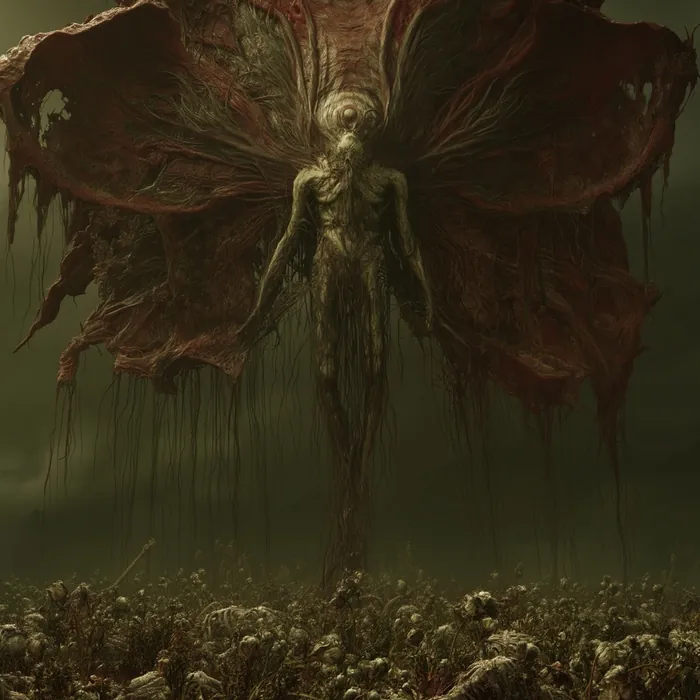
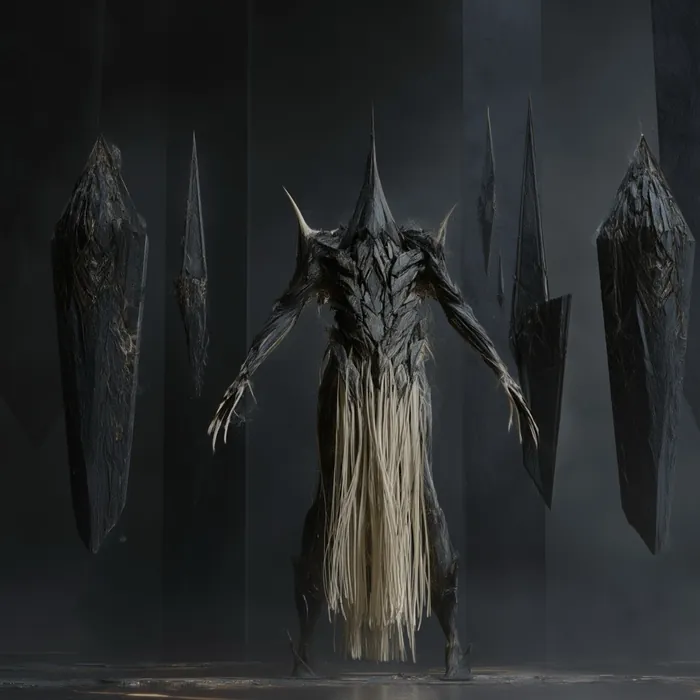
There is no Remoulded silhouette. Each is a different piece of a different Prince and wears whatever it retained.
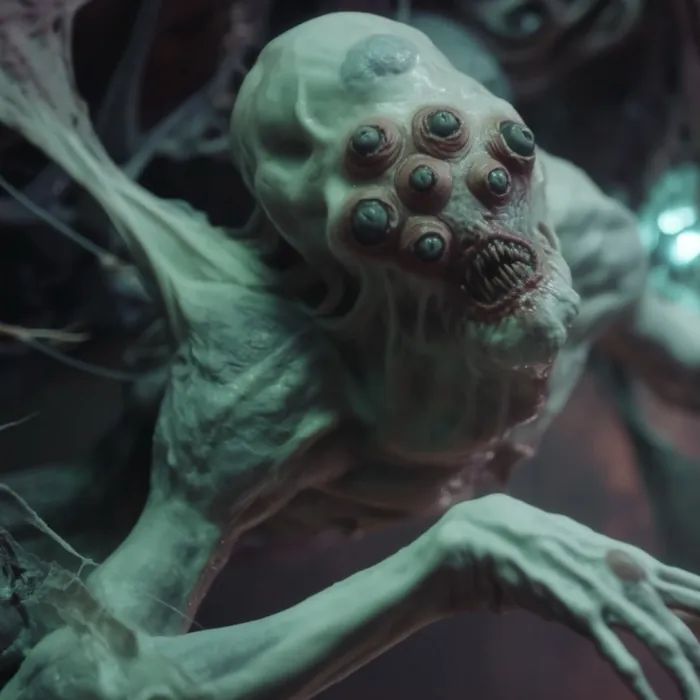
Vie'Kamee, gate-warden, was "a horrifying abomination furry and feathered and grossly lean, crowned with bloodied antlers made of flesh," nine feet tall, "naked, and rotted to its core," with "the exposed and rotted skull, in all its husked and hollowed out horror" and teeth "mishapen in every way." Its body was "too-many-jointed" with an "inward-thorned mouth," its inner bones cracked as it contorted, and it spat "a disgusting wad of blighted mucus, which lands on the walls, dissolving the Whitestone into mush." It healed while it was being watched.
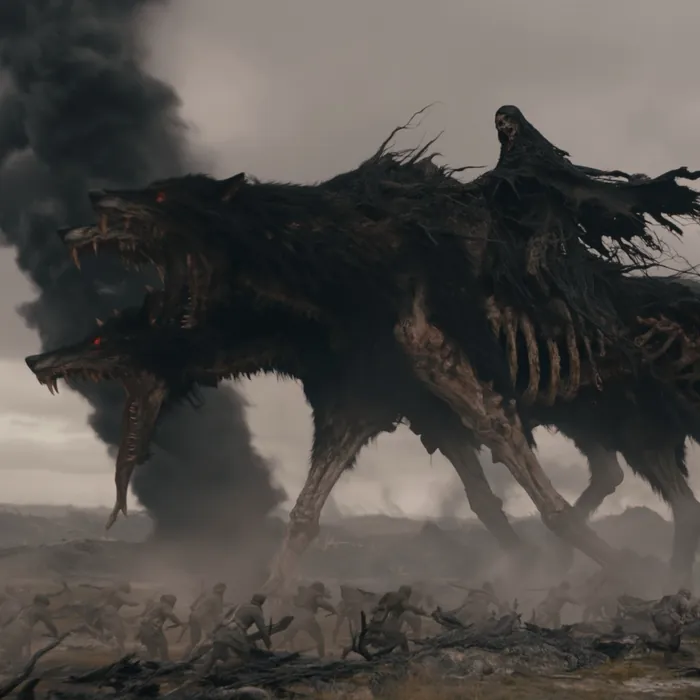
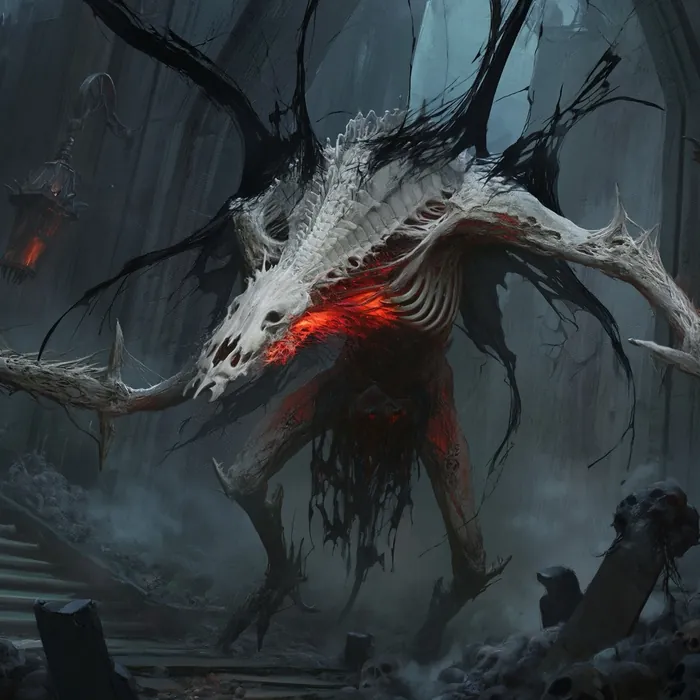
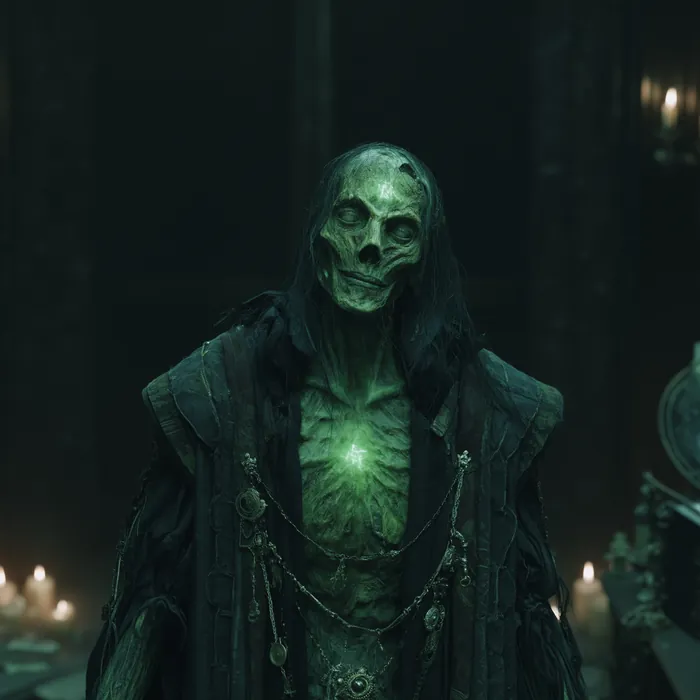
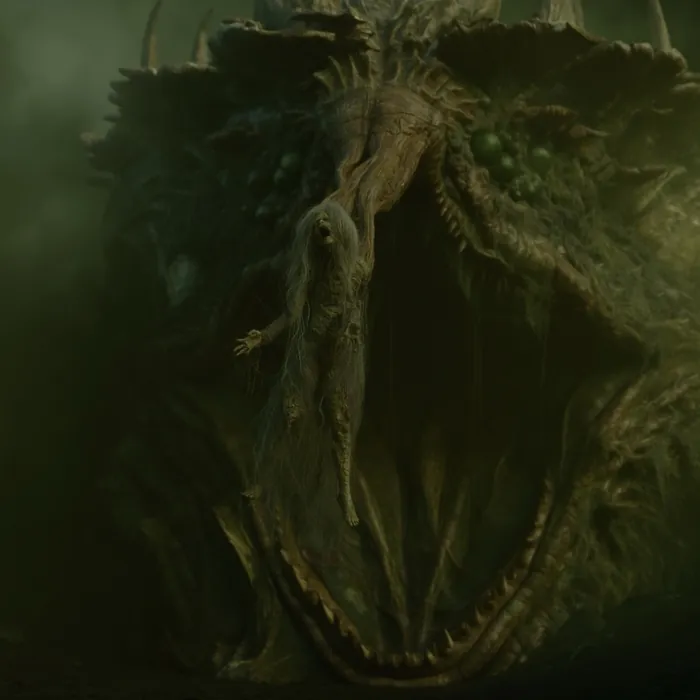
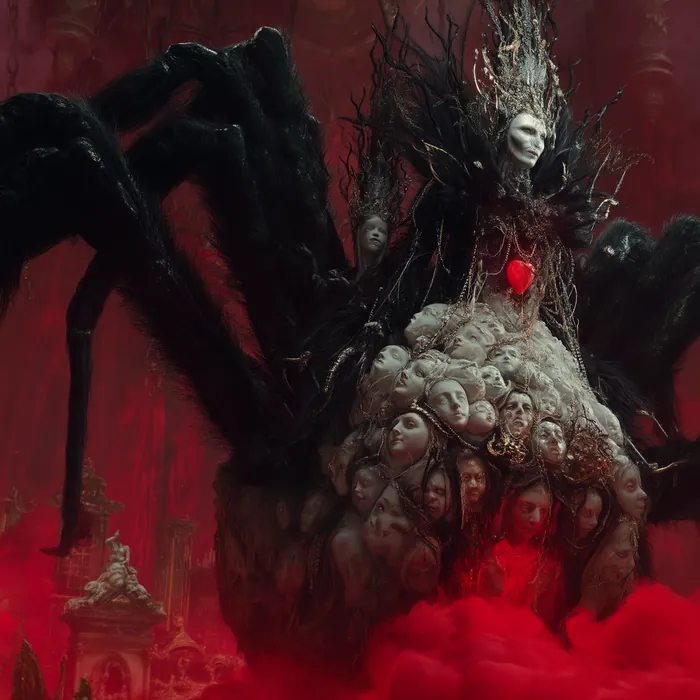
Volak'lihkxar, Keeper of Terror, "slithers down upon his three hundred tentacles, that work up under his golden tattered robe," concealing "a GANGLY LEECH MOUTH." Cthaierv'dhurukxi, the Queen, has "two mottled heads, woven amid SIX other malformed ones, their mouths woven shut by flesh," and "two minds, each in control of one arm," on "unfathomably gangly arms, with jagged shards husking out of their forearms." Thaishee'ojhinis, Keeper of Ignorance, "expands its dilapidated ribs, its aura bleeding out from its eyes and sizzling as it hits the floor." Khar'shkahur is "a Remoulded dragon-kin creature with leathery wings that blot out the twin moons," with "carrion eyes, a hooked beak-and-jaw," and it "exhales a toxic shroud of green-tinged gas." Ko'vrn the Ash Rider is "a rotted old man ontop a three headed werewolf looking horse; the two are fused together."
What holds across all of them is the rot, the wrong joint count, and the fact that the damage is not damage. A Remoulded is a partial thing, and the missing part is somewhere else in the world, walking. Height varies without limit; Ie'ishen is "an ever moving husked giant." Nobody has ever put one on a scale.
Underneath the descriptions there is one material and it is not flesh. A Remoulded is Dre'mnae, the substance of a Void Prince, holding a local shape in a reality that has no category for it. There are no cells in it, no organs, no blood and no grain. What a healer of any people would find on cutting one open is more of the outside: the same dark, dense, slightly resistant stuff all the way through, folding where it was folded, with the cut edges already creeping toward each other. The antlers of Vie'Kamee were made of flesh because it remembered antlers, and they were as much antler as its skull was skull, which is to say they were the same substance persuaded into a silhouette.
The rot is the most important thing about the body and it is not decay. The Caelyrean is a filter and its business is keeping this material out; a Remoulded standing in the world is a thing the filter is continuously trying to strain, and the rot is the strain in progress. It goes on forever and finishes never. The consequence is a map. Where the Caelyrean is thin, at old casting sites, in Miasma sinks, deep under stone, a Remoulded rots slowly and stands strong. In open air under an open sky it rots faster than it can hold, and it loses mass by the hour. This is why the dens sit where they sit, why the Coven's chamber is deep, and why the hundred dens are joined by ancient Alverian tunnels rather than by roads. A Keeper crossing sixty miles of daylit farmland arrives smaller than it left, and mass is rank.
The joint count is wrong for the same reason the shape is arbitrary. There is no skeleton, so there is nothing to limit where a limb bends; what looks like a joint is a fold, and a fragment folds where it remembers folding, which may be in eleven places along an arm. The cracking heard inside Vie'Kamee as it contorted was the sound of a material at its limit rather than bone.
They are cold. Every one of them, without exception but one, gives off nothing: a chamber with a Keeper in it loses heat, and cauldrons are lit in the Coven's hall entirely for the benefit of guests, since a court of Remoulded needs neither the warmth nor the light. The single exception is Tie'she'iki'veh, which is why the exception is worth stating.
Their senses are the strangest thing about them and are the reason they are so hard to deal with. They do not see; light gives them almost nothing, and a blindfolded Remoulded is inconvenienced no more than a man in a familiar room. What they have instead is smell, and what they smell is provenance. A Remoulded takes in where a thing has been, what it has touched, what it has done and who has handled it, layered like sediment and read from the top down. "Of distant lands you smell..." is a literal report. "We smell death..." is a statement about a visitor's recent employment. This is why the Coven's greeting is an inventory and why the first stage of the admittance rite catches a lie about the road instantly. It is also why they are collectors of memory, since memory is the only form in which they can acquire a provenance that is not their own.
What they are blind to is time. They can smell that a thing happened and cannot smell when, and their sense of duration is genuinely poor; a Keeper will speak of an event four centuries old and an event from the previous week in the same breath and the same tense, and does not experience this as confusion. Everything that follows from that is visible in their conduct. Remoulded contracts are obsessively explicit about sequence, and the clause that specifies what must happen before what is always longer than the clause that says what is owed. The cults keep the calendars, and a den without a cult loses track of the year. A mortal who can prove an order of events can win an argument with a thing that has been alive since before the Imperial Diet.
Life
They do not reproduce. They reassemble. "Due to the immeasurable size of a Void Prince, to bring an entire one within reality would require thousands of years of constant casting, and then, due to the fact that lesser Remoulded's are not aware of their previous form, must be hunted down and joined with their greater Remoulded part on the planet."
So the greater hunt the lesser, and the lesser do not know what they are. When a Remoulded consumes another it grows in size and recovers knowledge of its previous existence. When a queen's carcass melts, it "rejoins the remoulded, increasing its size and power." Their doctrine is Reassembly, "becoming whole," and their creed is "We were shattered and will be whole." That doctrine is literally true, which is worth noticing: almost every faith in this world is a comfort, and this one is a description.
Mass is the only quantity they have and it is simultaneously their size, their strength, their memory, their rank and the length of their name. There is no other measure. A Remoulded asked how old it is will answer with how large it is, and considers the question answered.
The eating is slow and is not violent once it has begun. The larger draws the smaller against itself and the two materials simply stop having an edge; there is no swallowing and no chewing, and it takes between an hour and a night depending on the mass. What arrives with the eaten fragment is everything it ever accumulated, out of order, in pieces, over the following weeks. A Keeper that has recently eaten is unreliable for a season and the Coven knows it and schedules around it.
The form is a record of the eating, which is why none of them match. Three hundred tentacles are three hundred kept things. The Queen's six malformed heads with their mouths woven shut are Keepers she has eaten and has chosen to keep whole and quiet. A great Remoulded is an autobiography written in limbs, and a Keeper who has read another Keeper's body knows what it has been doing.
There is no childhood and no death that holds. A fragment newly through the fissure is confused, ravenous and stupid for a few days, and the older ones know it, which is why the first thing a greater Remoulded does when a summoning is felt anywhere in its reach is send something to find what came out. A fragment that is not found grows into whatever the world lets it grow into. A fragment that is found is eaten by its own larger self and is grateful, in whatever way such a thing can be grateful, because being eaten by yourself is the nearest this class comes to going home.
They eat souls, and they eat each other, and between the two they eat people. Flesh gives them no nourishment; it is habit, and appetite, and courtesy at a court that likes to see a guest carved. The Nu'uman are named among the peoples Remoulded eat, and the Nu'uman are simply the ones who wrote it down.
Frailty
Nothing in the world can kill one and four things can undo one, and the class organises its entire politics around all four.
The first is the word. In summoning a Remoulded the caster takes one word out of that endless name and binds it to their own, and a summoner holding that word can return the thing to the void. The law is set out in full under Tongue, because it is a law of language before it is anything else. What belongs here is what it costs to live under it. Every bound Remoulded in the world is walking about with its undoing in somebody's mouth, and cannot kill that somebody, and knows it. It is the only arrangement in which a mortal has permanent leverage over a piece of a god, and the Remoulded response to it is not rage. It is patience, and logistics, and the quiet management of where the holder happens to be standing.
The second is what the void means to a thing that remembers. Being sent back is not death and is considerably worse. A dismissed fragment returns to the undifferentiated mass of its Prince, and everything it accumulated goes with it: every name-word it ate its way to, every century, every eaten self, every memory of having been a shape that walked and spoke and had a throne. It does not die. It stops being a particular thing, and the particular thing it stops being is the only one it will ever get. A Remoulded cut into a thousand pieces will crawl back together and lose nothing at all, which is why they are indifferent to violence. A Remoulded spoken back to the void loses everything and is not there to mind. The older the fragment, the more there is to lose, and the Coven's oldest members have accumulated so much that banishment would erase more history than the Imperial Diet has written down. That is the fear this class has, and it is the only one.
The third is the Caelyrean itself, grinding at them continuously, which is set out under Body. A Remoulded that must cross open country pays for it in mass, and mass is rank, so a Keeper that travels badly comes home outranked. The tunnels are not convenience. They are the circulatory system of the class.
The fourth is the host. A summoned Remoulded feeds on the soul and lifeforce of the one who bound it, and that is a tether as much as a meal. A host who is starved, imprisoned, kept beyond reach or worked to exhaustion is a supply line under strain, and a fragment whose host is failing goes thin and stupid in ways it will not discuss. Several old bargains in the world consist entirely of a mortal house keeping a summoner alive, comfortable and very closely guarded for four generations.
Against all of that there is nothing else. Whitestone does not hold them; Vie'Kamee dissolved it. Fire does nothing, cold does nothing, and the resonances that banish a Shade go through a Remoulded without being noticed. The Elegeian singers have tried, at least twice, and one of those attempts is why there is no longer a chapter house at the place where it was tried.
Country
The Den systems, in the Under Realm and beneath it, joined by ancient Alverian tunnels. "Existing within the world are Den systems, which are led by the Remoulded court of void terrors, the most sentient of the physical embodiment of Void Princes. Within this coven of monsters are a network that stretches across the planet, allowing these terrors to influence their lesser halves and species, creating an invisible shield of influence that has existed since the dawn of the Imperial Diet."
The sites with names are the Cold Keep at Uth'Kauzulin; the Underpath; the Penwood; the Sixth Estate tower; the Tower of Karthus at Aegaria, which is Vi'Lor Vethilex's library; and a castle below an Alverian tunnel entrance where High Den Mother Zaagahia dwells. Roughly one hundred dens hold seats in the Imperial Diet as the Sixth Estate.
A den is sited by one criterion and everything else is arrangement. It sits where the Caelyrean is thin: over an old casting field, at the bottom of a Miasma sink, under a weight of stone, in a place where somebody spent years punching holes in the filter and left them weeping. Such ground is inhospitable to everything else alive, which is the second reason the dens are undisturbed, and it is slowly fatal to any mortal servant who lives in it, which is why the cults turn over and why every den has an intake problem it does not describe as one.
What a den does to a country over a century is quiet and total. The sink deepens, because Miasma is drawn toward previous punctures. The water in the valley goes bad from the silt up. The livestock throw poorly and the people thin out, and the ones who remain are the ones the den has found uses for. Nothing is razed and nothing is conquered. The district simply becomes a place where the census figures decline and the local lord cannot say why, and in the fourth generation the lord is attending a den and calling it an understanding with a neighbour.
Above the dens and hidden from all of them sits the Thirteenth Estate, the secret Remoulded court. The Sixth Estate is the part of the Remoulded world the Imperial Diet is allowed to see, with its hundred seats, its boot on its neck and its formal complaints. The Thirteenth Estate is where the decisions are made, and no mortal polity has ever confirmed that it exists.
The Thirteenth Estate has no hall. It convenes wherever the Queen is, and the Queen is not always in the Coven chamber. Attendance is by summons, and the summons is delivered by Brigi'Tekth and by nobody else, which is why a Messenger outranks Keepers in practice while sitting below them in form. A den that receives the Messenger sends its Keeper or sends its apology, and there has been one apology in all remembered history and no den by that name any longer. The Estate's business is the reassembly of the Princes and the order in which it will be attempted, and that order is the only thing in the world the Keepers argue about.
Society
The Coven is real, it is formal, and it charges admission. A Queen sits a throne with the Keepers on lesser thrones beside her. The chamber is lit by "MASSIVE CAULDRONS." They wear golden tattered robes. There is an admittance ritual and there is a payment for entry, and a visitor who arrives without either does not leave.
They are obsessed with smell and with memory, and they greet a guest by inventorying them. "Of distant lands you smell..." "We smell death..." "Delicious morsel."
The admittance rite has three parts and the order is fixed. First the naming of the door: the visitor says aloud what they have come through, which gate, which tunnel, which drowned stair, and a lie here is caught instantly because the Keepers can smell the road. Second the price, which is never coin. The Coven takes memory, and takes it by preference from the middle of a life rather than the ends, because the middle is where a person keeps the things they use. A visitor pays a year and does not learn which year until they reach for it later and find a hole. Third the inventory, in which the Queen or the sitting Keeper names one true thing about the visitor that the visitor has hidden. That is the receipt.
Memory is taken because memory is the only thing a mortal owns that a Remoulded can use. It arrives as provenance, which is the one sense they have, and a year of somebody's middle life is a year of roads, rooms, handled objects and known faces added to a thing that has no way of acquiring such information by living. The Coven is, among other things, an archive of stolen ordinary experience, and this is why its members are so unnervingly good at conversation.
Rank in the Coven runs by mass and by office at once, and the two are usually the same thing, because the office goes to whoever has eaten enough to hold it. A Keeper holds a domain of the Void rather than a territory: Terror, Ignorance, Decay, Discord, Gluttony, the Underway. The domains are neither metaphors nor portfolios. A Keeper of Terror is made of terror, in the same way that a hand is made of meat.
They honour contracts, observe ritual and keep a court, and they eat the signatory. Both halves of that are load-bearing. A Remoulded will not break an agreement, because the agreement is the shape it holds in reality, and it will construct the agreement so that keeping it is worse for the other party than breaking it would have been.
Below the court sit the cults. "Smaller Dre'mnae have entered into the game, and secret cults have formed around them, as their followers wish to enter into a more private and unique afterlife. This is a high risk scenario that can leave you thrown into the Void or pay off to be raised as a god in a more niche and illustrious world to your liking." The cults do the summoning and pay in souls, usually their own by instalment. A den without a cult attached to it is a den that has recently lost one. The cults also do all the work the class is physically unsuited to: they hold the calendars, they walk in daylight, they carry messages across open country, and they keep the ledgers of what was promised in what order. A Keeper is a magnificent negotiator and cannot reliably tell you what month it is.
Faith
They are the object of faith more than the practitioners of one, and they hold a doctrine of their own: Reassembly. "We were shattered and will be whole." It is true.
They pray to their Princes, and the prayer is directional rather than devotional; a fragment praying to a Prince is a piece calling to the whole. The Void Princes are real, they hold realms, and unlike the worldly gods they can deliver what they promise. That is why void faiths keep winning converts in a world where the shrines of Tantis and Orton promise afterlives that do not exist.
The Coven's own rite is the Counting. Once in a long while the Keepers sit and each recites what it can remember of its own name, and the Queen listens for overlap, because two fragments whose names share a run of words are pieces of the same limb and should be joined. Most Countings end in nothing. Three have ended with a Keeper eating another Keeper on the floor of the chamber, and the survivor kept both thrones.
Tongue
Naga'esh, Aezithis' language, corrupted Nuta'el. The attested lines run: "Tor-kaheh, doarhguur Aezikiesh..." / "KAIR'AHSHU?!" / "KIVEN'KOR KHARSH'KHUR! TRAIVER!" / "BI'ESEN VIK ARH!" The naming law is apostrophe-broken consonant clusters, heavy on the kh, th, x, j and vh digraphs, and the Coven address one another by title and true-name together.
Then the name-binding law, which is the most consequential rule in the tier. "In summoning a Remoulded, as their name is near endless in understanding, one must take from it a word, and bind it to theirs, keeping it secret, as by the use of it under certain circumstances, can return the Dre'mnae back to its voided form." The summoner takes one word out of that endless name and binds it to their own name, and both halves are kept secret for as long as the binding lasts.
Four consequences follow and every one of them is a knife with two handles.
The name is a length rather than a name. What is written down is never the whole of it, because the whole of it cannot be written.
The binding is mutual. The summoner's own name is now part of the seal, which is why summoners take false names, retire under them, and are buried under them. A summoner who talks has disarmed himself and armed everyone in the room.
The names die with the masters. "As many of their masters have fallen to death, the ancient Remoulded names have been lost to the ages." Every ancient Remoulded walking the world is a thing whose undoing was buried with somebody a thousand years ago. That is why the old ones are the dangerous ones, and why grave-robbing in this world is a political act.
Eating makes them harder to send back. "If one wished to send a Remoulded back, one that has consumed many of itself, one would have to speak its entire name that has found itself in the world." Every fragment consumed adds that fragment's portion of the name to the total. Reassembly and banishment are one ledger read from either end. A fresh fragment can be dismissed with a word. Zaagahia, "the most formed Remoulded on the planet Nu," would take a recitation no living throat could complete.
The circumstances under which a spoken name works are narrower than the cults believe, and the Coven has spent centuries making sure the cults keep believing the wrong things. The word must be spoken aloud, in one unbroken breath, by a voice the Remoulded has heard before, and within its reach. Whispered, written, sung by a proxy, or shouted from beyond a wall, it does nothing. This is why a summoner is never safe and never entirely unsafe: the Remoulded cannot kill the one who holds its word, and it can arrange for the holder to be somewhere it cannot hear them.
Regard
Arthur's rule of thumb is the only advice the world offers: "That one mustn't be unarmed or unspelled in meeting one..." Aezithis, who made the world they infest, gives the shorter version: "Remoulded are never as they seem."
Among scholars they are studied and denied in the same paragraph. Among the peasantry they are the reason a name is not said twice at night. Among the Mekuhlian, who work nearer the void than anyone, they are treated as a rival profession rather than a horror, which is the sort of respect that gets people eaten.
Their standing among their own kind is simpler. The Void Princes are their masters, and every Remoulded prays to the one it came off. The Great Shattered are prey, being their scattered lesser halves. Each other are prey too: Khar'shkahur killed Vie'Kamee and greeted him first with "Hello cousin." The void cultists are servants, who summon and pay. The Imperial Diet keeps its boot on the hundred dens while the dens keep an invisible shield of influence over the world, and both of those are true at the same time. The Nu'uman, among others, are food. The Dreamt Ones are enemies of a kind: a Lich serves a Prince directly and a Remoulded is a piece of one, and the two arrangements do not sit well together. A Lich King at a Prince's table outranks any Remoulded in that Prince's regard, the Remoulded know it, and the courtesies exchanged between a Coven and a Lich King's household are the coldest in the world.
Harvest
Nothing. No Remoulded material has ever entered the Material Codex, and no Class One body has ever been cut up for parts, for the plain reason that there is no Class One body: what is cut off crawls back. A severed piece left in a sealed box has been observed to thin and go, over weeks, working its way toward the rest of itself and dissolving on the way, since a fragment of a fragment is too small to hold against the filter.
Two things are traded adjacent to them and both are frauds or near it. The first is the immortality serum of Vi'Lor Vethilex, sold at great price for centuries, of which the truthful account is the shortest in the record: "it's just being Remoulded." The second is a word. Single words of great names change hands in the same markets that move void elixir, at prices that would buy a county, and most of them are counterfeit; there is no way to test a syllable except by using it, and using a wrong one in the presence of the thing it was sold against is the last purchase a buyer makes.
Remembered
The named ones sit as the Coven and as the others, and that is how they are set out here.
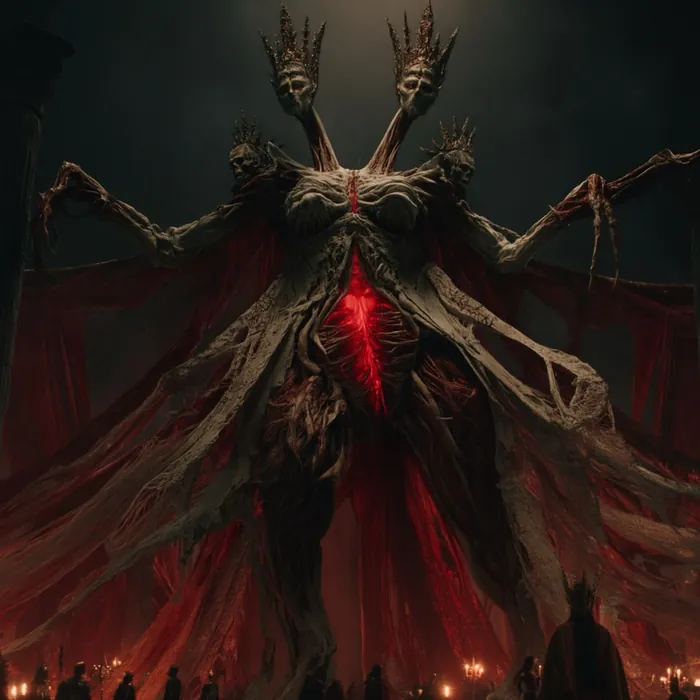
Cthaierv'dhurukxi, Coven Queen. Two mottled speaking heads woven among six malformed ones whose mouths are sewn shut by flesh, two minds, one to each arm, on unfathomably gangly arms with jagged shards husking out of the forearms. When she speaks, both heads speak, and her dialogue is set down in two columns because neither waits for the other. She is the Remoulded Queen the Coven took up after the fallen king, and the Thirteenth Estate convenes where she is. The six sewn heads are neither decoration nor decay. They are Keepers she has eaten, kept whole and kept quiet, and every one of them carries a portion of her name that she has chosen not to let anyone hear. Keeping them shut is the most disciplined thing any Remoulded has ever done, since a mouth that could be made to recite is the one door into her, and she has held six of them closed for longer than the surface has had kingdoms. She has ruled longer than any polity on the surface has existed and she wants nothing except more of herself.
Ghida, Keeper of Gluttony. Gluttony is hers; Decay is Kthuji'ji'ujhmi's and remains so. Gluttony is the newest office in the Coven and was made for her, which tells its own story about how she came to sit again after being out of the old court. She is the widest thing in the chamber, low and spread, with a mouth that runs the length of her front and a second set of jaws behind the first that works whether or not the first is busy. Her domain is not hunger. It is the certainty that there will be more. She is the Keeper who negotiates with the cults, because a cult can always be persuaded to give a little more than it planned, and she is the one who counts what the Coven has eaten and tells the Queen whether it was enough. It never is.
Kthuji'ji'ujhmi, Keeper of Decay. Nobody describes him and the Coven prefers it that way. What sits on the throne of Decay is a robe with process inside it. Things near Kthuji'ji'ujhmi age: cloth goes at the seam, iron blooms, a fresh wound opens into an old one, and a visitor who stands too long on his side of the chamber leaves with grey in their hair. He speaks seldom and slowly, and each sentence arrives already sounding like something remembered rather than said. He is the oldest sitting Keeper and the least ambitious, which in this court makes him the safest to stand near, and he is still the reason the cauldrons on his side of the room have been replaced eleven times.
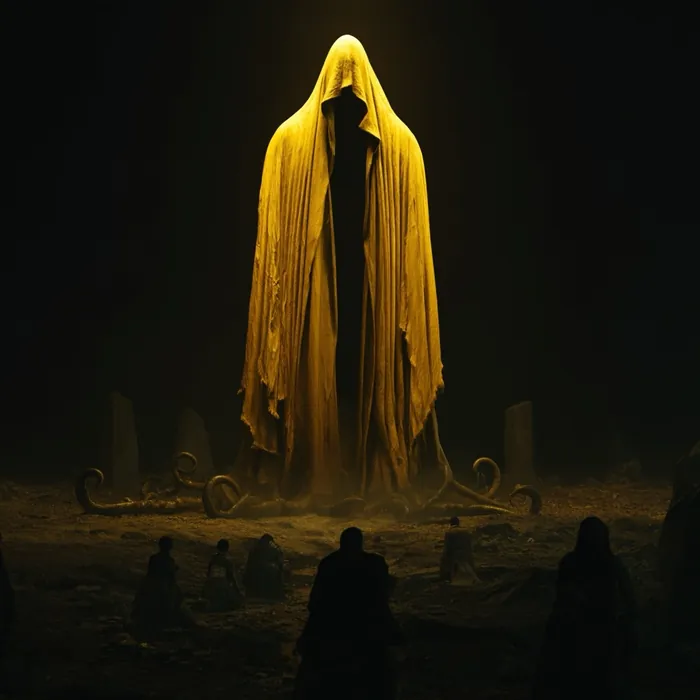
Volak'lihkxar, Keeper of Terror. He "slithers down upon his three hundred tentacles, that work up under his golden tattered robe," concealing a gangly leech mouth. The robe is not modesty. Terror is his domain and a domain is worked rather than worn: what he keeps under the gold is shown one limb at a time, to one guest at a time, and the choice of which limb is a judgement about the guest. Three hundred limbs is three hundred eatings, and he can tell a visitor what each one used to be, and does, when he wants a particular effect. He does the Coven's asking when asking must be unpleasant. He is the Keeper the dens fear most and the Queen trusts least, because a thing made of terror has only one way to be useful and cannot stop being it.
Thaishee'ojhinis, Keeper of Ignorance. It "expands its dilapidated ribs, its aura bleeding out from its eyes and sizzling as it hits the floor." Ignorance is the most misread office in the Coven and the most valuable. Thaishee'ojhinis does not keep stupidity. It keeps what is not known, which means it keeps the gaps: the lost names, the burned records, the years that visitors have paid in, the parts of the world the Diet has forgotten it once mapped. It is the Coven's archive of holes. When the Queen wants to know what somebody has failed to notice, she asks Thaishee'ojhinis, and the ribs open, and the answer bleeds out of its eyes and burns a mark into the floor that stays.
Kiessein'vohl, Keeper of Discord. Nobody describes her either, and she is the reason the Coven has never been overthrown from inside. Kiessein'vohl is small, by the standards of the chamber, and jointed like something assembled in a hurry out of two different animals, and she is never in the same place twice within a single audience. Discord is her domain and she works it upward and outward: between dens, between cults, between the estates of the Diet, between a lord and his heir. She has never eaten another Keeper and has no need to, because a court busy suspecting itself does not notice which of them arranged it. Being small, she travels above ground more freely than any of them and loses less doing it, and half of what the Coven knows about the surface she has smelled herself. She is the only Keeper who laughs.
Vie'Kamee, Keeper of the Underway. Gate-warden, nine feet, furry and feathered and grossly lean, crowned with bloodied antlers made of flesh, naked and rotted to its core, husked skull exposed, teeth mishapen in every way, too-many-jointed, inward-thorned mouth, inner bones cracking as it contorted. It spat blighted mucus that dissolves Whitestone into mush. It held absolute authority over its assigned gate, and it was a cannibal, which in this class means it advanced. It was killed by Khar'shkahur, who greeted it as cousin first. The Underway is the office of the roads between dens, which in a class that cannot cross open country is the office that holds the class together, and Vie'Kamee held its gate the way a toll-keeper holds a bridge, by being the only route and being worse than the detour. Its death opened the office and the office stands empty, because filling it means standing at a gate that Khar'shkahur knows the way to.
Brigi'Tekth, Messenger of the Thirteenth Estate. A mass of horrifying tentacles beneath a golden cloak of ancient fabrics that seems translucent and is not. The tentacles carry him across the floor and peek out from beneath the robes as he moves. None know his true form, and none have seen more of it than the hem allows. His title has confused every mortal scholar who has heard it, because the Imperial Diet has six estates and thirteen Electors, and no charter anywhere names a thirteenth estate. That is the point of the name. The Thirteenth Estate is the seat that was never granted and never asked for, and the Messenger is its only visible officer. He carries summons, he carries terms, and he carries nothing back that he was not sent to carry; he has never once answered a question.
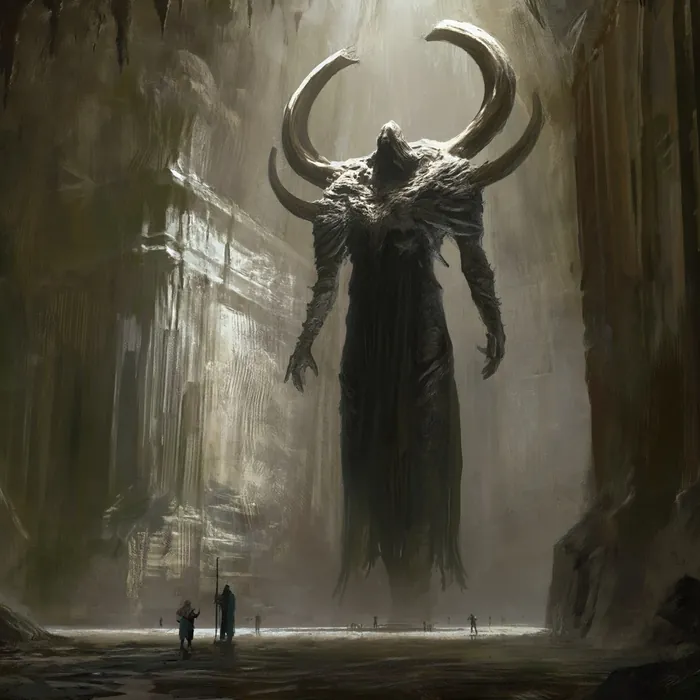
Ie'ishen the Fallen. "The oldest and eldest of remoulded terrors, an ever moving husked giant in the cave realms, holding infinite knowledge of both ends and beginnings." He does not stop walking, and the cave realms are large enough that he has never had to. The walking is understood by the Coven to be practical: a mass that size holds better in motion under stone than standing still anywhere, and Ie'ishen worked that out long before there was a court to tell. He holds no office and attends no court. What he knows he will tell to anyone who can keep pace with him, which is the whole of the difficulty.
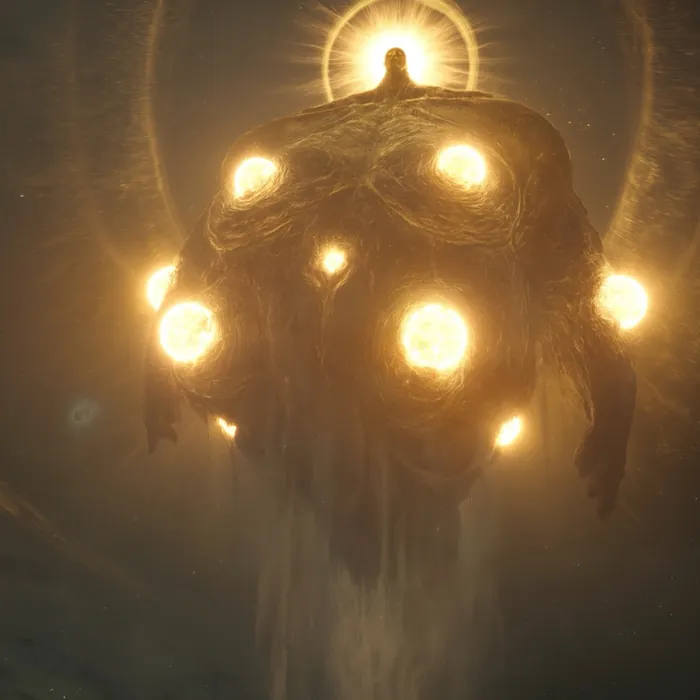
Tie'she'iki'veh, Star of Slaughter. A great mass of burning starlight, a supernova held inside a being, and its aim is to consume all. It is the only Remoulded that cannot be looked at directly and the only one that gives off heat. It holds no den, does not sit in the Coven and does not answer the Messenger. Where it has been, the ground is glass and the shape of what stood there is printed on any wall still standing. It crosses open country freely and in daylight, which no other member of this class can do, and the Coven has never decided whether the burning is what protects it from the filter or what the filter is doing to it. The Coven's position on Tie'she'iki'veh is that it is a fragment of a Prince whose reassembly must be attempted last. It has never spoken to them, so the Coven has no idea what its position on them is.
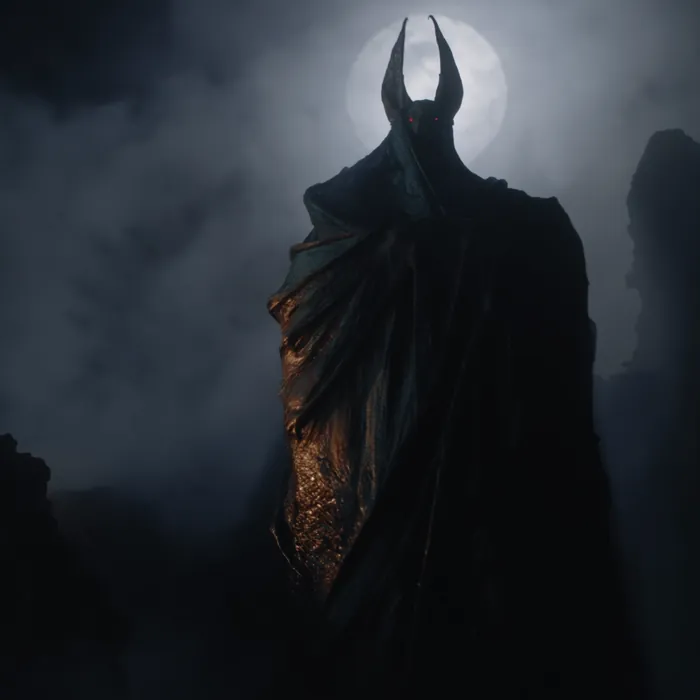
Khar'shkahur, the Winged Terror. Khar'shkahur is the full name of the one bound to Arthur; the form Karshk that appears in older records is a summoner's fragment, written down by somebody who did not understand that a word out of a Remoulded's name is a binding rather than a label. A Remoulded dragon-kin creature with leathery wings that blot out the twin moons, carrion eyes, a hooked beak-and-jaw, and a breath that is "a toxic shroud of green-tinged gas." It kills other Remoulded and calls them cousin while it does it. It killed Vie'Kamee. It is bound, and the binding is the most dangerous private arrangement in the world, because the word that holds it sits with a man whom everyone watches. Khar'shkahur is patient about this in the way a thing with no lifespan can afford to be. It has never asked to be released. It has, on three occasions the Coven knows of, arranged matters so that its holder was somewhere it could not be heard from, and then gone hunting cousins.
Vi'Lor Vethilex, of All Thought. In exile since the collapse of the Tyberian Empire. Summoned by the Caronians, he escaped their binding and fled. He returned to Melcaron College at the founding of the Tyberian Empire and rose to be a prominent Archmagister. He is famed for an immortality serum that does not exist: "it's just being Remoulded." Then the extraordinary part, unique in the whole record: he "removed the Void from himself, becoming a pure Fulatari," and with the void gone he could take up astral magic and became a powerful mage. He keeps a library in the Tower of Karthus at Aegaria, reads, and smokes Olaean Leaf, "a decadent import from Qi'nor." He is the proof that the class is not a sentence. He is also the only Remoulded who cannot remember what he was a fragment of, and he has come to understand that the two facts are one fact: taking the void out of himself took the thread back to his Prince with it. What else it took is worth setting down, since he is the only one who can report it. The filter no longer grinds at him, so he does not rot, and he can sit in a sunlit window; and he lost the provenance sense entirely, so that he now learns the way everybody else learns, by asking and by reading, which he says took him ninety years to get any good at. He will answer any question that can be afforded. His price is never coin and never memory, because he thinks the Coven's price crude. He asks for a question in return, and he keeps the answers, and the library at Karthus is largely made of them.
High Den Mother Zaagahia. "The most formed Remoulded on the planet Nu," dwelling in a castle below an Alverian tunnel entrance, and she "knows all." Most formed means most eaten. Zaagahia has been reassembling for longer than the Coven has held court and she has never sat in it; a Den Mother takes no domain, because a domain is a portion and Zaagahia has no interest in portions. Her name is the longest in the world and she does not know how many words are in it either, which is the loneliest fact in this tier: she has consumed so much of herself that she can no longer recite herself, and so she can no longer be sent back, and so she cannot go home the short way. The dens send her tribute in fragments, living, in cages. She keeps them a while and speaks with them first.
Drainijod the False Dreamer. The mortal materialization of Drenolor, and no summoner's work: Drenolor put a piece of himself into a shape that walks among people and does not frighten them, and that shape is Drainijod. He is the only Remoulded who passes. Because he was placed rather than pulled, the filter has no quarrel with him: he does not rot, he does not thin in daylight, and he can stand in a market at noon for as long as he likes, which is precisely the capability the whole Coven lacks and precisely why they resent him. He is met as a traveller, a physician, an interpreter of dreams, a kind man at a bedside, and the epithet is exact: what he offers is a dream and the dream is false. He is the Coven's most useful ally and their most resented one, because he does above ground what the whole court cannot, and he does not report to the Queen. Where a cult forms without a summoning, Drainijod was there first.
Ko'vrn the Ash Rider. "A rotted old man ontop a three headed werewolf looking horse; the two are fused together." He rides ahead of the ash winters and is blamed for them wrongly; the Crimson is none of his, and he simply likes the weather. The liking is practical. An ash sky is a thick sky, and under a falling ash winter a Remoulded can cross open ground at a fraction of the usual cost, which is why Ko'vrn travels when he travels and why he is the only member of this class with a reliable overland route. He carries messages that are not the Messenger's, for a price, between dens that are not speaking to each other.
Three more are named alongside them and belong elsewhere.
Zhurx is a Nu'uman, cursed by a Void Prince of plague and pestilence for trying to steal power from it, and he carries the purest form of that god's disease; he is no fragment of a Prince and therefore no Remoulded at all. The description holds: "the disheveled and boil riddled face," and "the lacking of lips reveal a set of jagged and uneaven teeth, with pieces of fresh and rotten flesh n' bone stuck between them." Elsewhere he appears as Iqora's bound abomination, the ghoul pet. He is written in full among the Crimson Horrors, Class Five, where a cursed carrier belongs.
The Pendragon of the Penwood, the Wyrm called "a foul remoulded" in the older records, slain by Gaius' father, is a Shattered and is written under Class Two; the kill is the origin of the Pendragon name, and the Penwood remains a Remoulded site regardless, with something else at large in it now.
Mahlbar, Delfi and the Liches hold high seats at the tables of their Void Princes and are no Remoulded at all; they are written under Class Three, and are noted here only because a Coven and a Lich King's household will both claim precedence in a room, and the room is what gets destroyed.
Named among the Remoulded thirteen of the court, as the record names them
Kin each has a page of its own
Lore
Summary
Extended Lore
Still unwritten in the record for this entry.
- Where the Cold Keep at Uth'Kauzulin, the Underpath and the Sixth Estate tower stand on the map of Nu
- How many Void Princes there are, and which fragments came off which
- What the fallen Remoulded king was called, which the Keepers will not say
- Where the Thirteenth Estate last convened, and who attended
- What the Imperial Diet gets in return for seating a hundred dens
- How a den is founded, and whether one has ever been founded in living memory